Winter Eye Care: Beating Dry, Tired Eyes When the Heating’s On
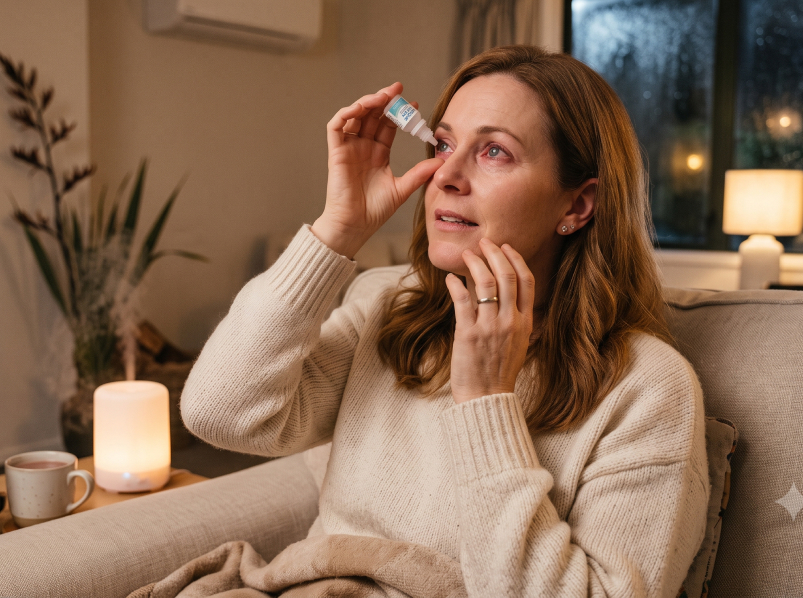
If your eyes feel gritty, tired or watery once the heating goes on, you are not imagining it. Winter dries your eyes out. Indoor heating and heat pumps strip moisture from the air, cold wind speeds up tear evaporation, and most of us spend longer on screens. For many people, a few simple changes bring real relief. In this blog we’ll explain why winter hits your eyes, and when dryness is worth getting checked.
The short version
- Winter dries your eyes through low humidity, indoor heating and heat pumps, cold wind and more screen time.
- Watch for gritty, burning or watery eyes, blurred vision that clears when you blink, and light sensitivity.
- Simple relief: a humidifier, regular blink breaks (the 20-20-20 rule), staying hydrated, omega-3, and easing off the heat-pump blast.
- Lubricating eye drops can settle short-term irritation; our optometrists can recommend the right type for you.
- If symptoms persist, a Dry Eye Assessment can find the cause and set a longer-term plan.
Why are your eyes drier in winter?
If you are wondering what causes dry eyes in winter, a lot of it comes down to moisture. Your eyes rely on a steady tear film to stay comfortable, and several things about a New Zealand winter work against it.
Low humidity and indoor heating
The biggest culprit is dry air. Heat pumps and indoor heating make our homes warm and comfortable, but they also reduce the moisture in the air. As the air becomes drier, it draws moisture from the surface of your eyes, leaving them dry, irritated and uncomfortable. The same effect can occur in air-conditioned offices and inside your car, where heaters and demisters blow warm, dry air directly towards your face, further increasing tear evaporation and worsening dry eye symptoms.
Cold wind and more screen time
Step outside and cold wind speeds up how quickly your tears evaporate, leaving your eyes feeling raw. Back indoors, winter tends to mean longer hours on screens, and we blink far less when we are concentrating. Fewer blinks means the tear film is not refreshed as often, so your eyes dry out faster.
The signs of dry eye to look for
Dry eyes do not always feel “dry”. The most common signs are:
- a gritty or sandy feeling, as though something is in your eye
- burning or stinging
- redness, or tired, heavy eyes
- watery eyes, as your eyes over-produce tears to compensate
- blurred vision that clears for a moment when you blink
- sensitivity to light
If these come and go with the season, winter dryness is the likely cause. If they are constant or getting worse, it is worth having your eyes checked.
Simple ways to relieve dry eyes at home this winter
The good news is that a few small changes make a real difference once the cold sets in.
Add moisture back into the air
Because winter dryness starts with the air around us, one of the simplest ways to protect your eyes is to add some moisture back into your environment. Running a humidifier in the rooms you use most and turning the heat pump down a notch, where practical, can help keep both the air and your eyes more comfortable. Staying well hydrated throughout the day also supports a healthy tear film, helping your eyes stay naturally lubricated.
Give your eyes a break from screens
We recommend the 20-20-20 rule for the long winter hours indoors: every 20 minutes, look at something about 20 feet (6 metres) away for 20 seconds, and make a point of intentionally blinking fully a few times. It sounds small, but it gives your tear film a chance to recover.
Protect your eyes outdoors
Wraparound sunglasses are not just for summer. Out in the cold wind they shield your eyes and slow down how quickly your tears evaporate on your walk or commute.
Support your tear film
A healthy diet that includes omega-3 fatty acids, found in oily fish and some supplements, may help support healthy tear production and a more stable tear film. For everyday comfort, lubricating eye drops (also called artificial tears) can provide quick relief from dryness and irritation. With so many options available, it's worth asking one of our optometrists which eye drops are best suited to your eyes rather than trying to choose from the pharmacy shelf.
When to see our optometrist about dry eyes
Most cases of winter dry eye improve with the simple steps above. However, it's a good idea to book an eye examination at Visique Eye Spy if:
your symptoms last longer than a few weeks or keep coming back
your eyes are persistently red, painful, or very sensitive to light
your vision is blurred and doesn't clear when you blink
over-the-counter lubricating eye drops aren't providing relief
Dry eye, sometimes called dry eye syndrome, can sometimes be a sign of an underlying condition, so it's important not to ignore ongoing symptoms. At Visique Eye Spy, we'll identify the underlying cause of your dry eyes and recommend treatment that's tailored to your individual needs, not just temporary relief.
How Visique Eye Spy can help
If your dry eyes are persistent, a Dry Eye Assessment provides a thorough evaluation of your tear film, eyelid health, and the underlying cause of your symptoms. From there, we can develop a personalised treatment plan to provide lasting relief rather than just managing the symptoms. For some people, this may include advanced in-clinic treatments such as IPL (Intense Pulsed Light) therapy.
If winter has left your eyes feeling dry, gritty, watery, or tired, don't put up with the discomfort. Book an eye examination or Dry Eye Assessment with our Palmerston North team online, or get in touch and we'll find a time that suits you.
Frequently asked questions
How do I stop my eyes drying out in winter?
Put moisture back into your environment and your routine: run a humidifier, ease off the heat-pump blast, stay hydrated, take regular blink breaks from screens, and use lubricating eye drops for quick relief. If the dryness persists, see your optometrist.
Can winter make dry eyes worse?
Yes. Low humidity, indoor heating, cold wind and extra screen time all speed up how quickly your tears evaporate, so many people notice their dry eye symptoms flare in winter.
How can I quickly relieve dry eyes?
Lubricating eye drops give the fastest short-term relief, and a few slow, full blinks help spread your tears. Stepping away from the screen and adding moisture to the room helps the irritation settle.
Does omega-3 help dry eyes?
Omega-3, found in oily fish and in supplements, can support a healthier tear film over time. It is a long-term habit rather than an instant fix, and your optometrist can advise whether it is worth adding for you.